
Web 2.0 is a term in 2003 that refers to the social phenomenon that has arisen through the development of various applications Internet. The time distinguishes between the first era of the web (where the user was a taxpayer who received or published the information without too many opportunities to generate the interaction revolution that rise of the Internet, from blogs, social networks, and other related tools.
It, therefore, consists of content publishing platforms like Blogger; social networks like Facebook, wikis (Wikipedia); and photo, audio, or video hosting portals (Flickr, YouTube). The essence of these tools is interacting with other users or providing content that enriches the browsing experience
Table of Contents
From Web 2.0 to Now: The Evolution of User-Generated Content
Web 2.0 marked the transition from static consumption to active participation. While the term emerged in the early 2000s, its principles now underpin social media, creator economies, community platforms, and digital marketing strategies worldwide.
Growth of User-Generated Content Globally
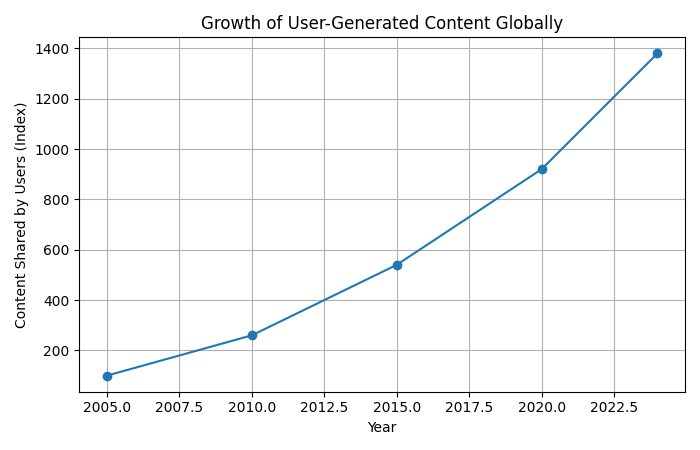
| Year | Content Shared by Users (Index) |
| 2005 | 100 |
| 2010 | 260 |
| 2015 | 540 |
| 2020 | 920 |
| 2024 | 1,380 |
Modern platforms still operate on it foundations—interaction, sharing, and participation.
Evolution of the Web
| Feature | Web 1.0 (1990–2003) | Web 2.0 (2004–2015) | Modern Web (2016–Now) |
| User Role | Reader only | Content creator | Creator + Consumer |
| Content Type | Static pages | Blogs, social posts | Short video, live, AI-assisted |
| Interaction | Minimal | Likes, comments | Real-time, community-driven |
| Platforms | Yahoo, static sites | Facebook, Blogger, YouTube | TikTok, Instagram, X, AI tools |
| Marketing Style | One-way promotion | Engagement marketing | Community & creator economy |
This table helps readers globally understand how it fits into today’s internet, instead of seeing it as outdated.
Web 2.0 Functions
It is important to note that there is no precise definition of it, although it can be approximated by configuring specific parameters. A website that is limited to presenting information and is not even up-to-date belongs to generation 1.0.pages offer a high degree of interaction and update the users’ contributions. is referring to as it.
Until then, the Internet was a universe of primarily static data. A revolutionary reference source that drew millions of people to think passively about it. Although forums and chat originated from Web 1.0, they were very different from traditional sites (as is the case today); Navigating was like visiting a large shopping mall with countless stores selling products, but without changing the shop windows.
Functional Differences Between Web 1.0 and Web 2.0
Web 1.0 vs Web 2.0
| Feature | Web 1.0 | Web 2.0 |
| Content Creation | Site owners | Users |
| Interaction | Minimal | High |
| Updates | Infrequent | Continuous |
| Navigation | Static pages | Dynamic feeds |
| Role of User | Reader | Participant |
This functional shift laid the groundwork for social platforms, online communities, and influencer-driven media.
Core Characteristics of Web 2.0 Platforms
Defining Characteristics
| Characteristic | Description |
| User Participation | Users create, edit, and share content |
| Continuous Updates | Platforms evolve based on user input |
| Social Connectivity | Networks form around content |
| Collaboration | Knowledge built collectively (e.g., wikis) |
| Accessibility | Low technical barriers to publishing |
These characteristics now power social networks, review platforms, and creator tools globally.
Key Features That Defined Web 2.0 (Global Adoption %)
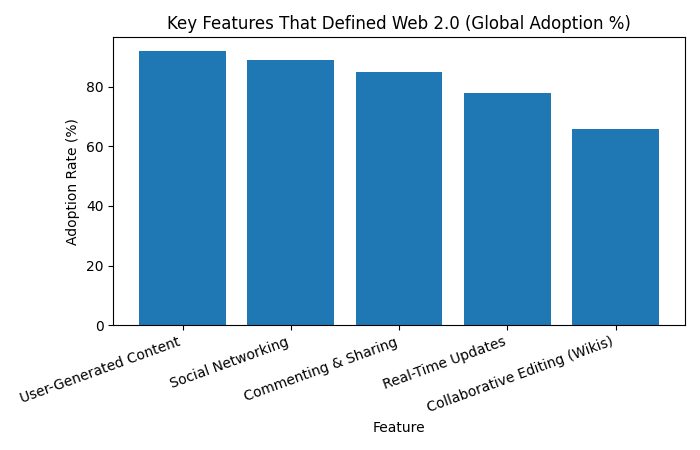
| Feature | Adoption Rate (%) |
| User-Generated Content | 92% |
| Social Networking | 89% |
| Commenting & Sharing | 85% |
| Real-Time Updates | 78% |
| Collaborative Editing (Wikis) | 66% |
It shifted power from publishers to users. Features like commenting, sharing, and collaborative creation turned the internet into a two-way conversation worldwide.
A social phenomenon
With the advent of it, there was a social phenomenon that changed our relationship. To information forever Largely because it made us a part of it: Currently, the news about an animal abuse. Demonstration is not complete without showing how many Users are Facebook readers and I enjoyed. The percentage of readers who endorsed the movement and the comments that often provide important data or point out errors.
Web 2.0 as a Social and Cultural Revolution
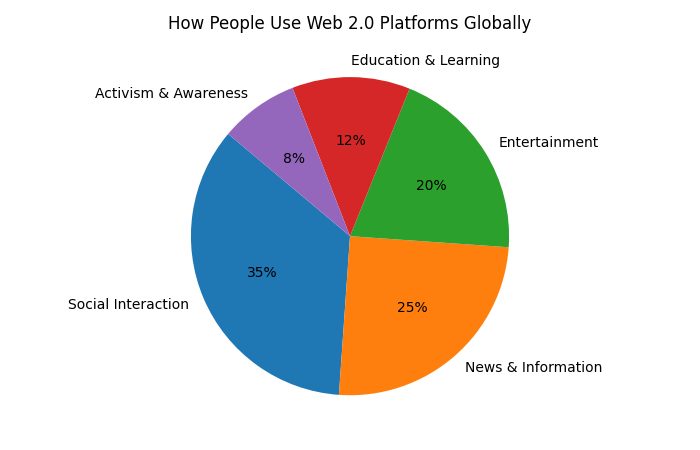
How People Use it Platforms Globally
| Purpose | Share (%) |
| Social Interaction | 35% |
| News & Information | 25% |
| Entertainment | 20% |
| Education & Learning | 12% |
| Activism & Awareness | 8% |
This shows global behavior, proving it didn’t just change technology—it changed culture, politics, journalism, and activism.
Impact of Web 2.0 on Media, Journalism, and Marketing
Like every milestone in human history, It related democracy has had a strong impact on traditional media. Especially those who did not know how to adapt to this new wave of freedoms. In the last decade, several independent newspapers and magazines have emerged that have managed.To establish themselves worldwide and achieve great success In contrast to the decline of the former giants.
Trust Shift from Traditional Media to Digital Platforms
| Year | Traditional Media Trust (%) | Digital Media Trust (%) |
| 2005 | 78 | 22 |
| 2010 | 62 | 38 |
| 2015 | 48 | 52 |
| 2020 | 35 | 65 |
| 2024 | 28 | 72 |
It forced brands and journalists to adapt. Engagement, transparency, and community feedback now matter more than authority alone.
Shift in Influence from Traditional Media to Digital Platforms
| Medium | Influence Index (2000 vs 2024) |
| Print Media | 90 → 30 |
| Television | 85 → 45 |
| Blogs | 10 → 40 |
| Social Platforms | 5 → 80 |
It democratized publishing—any individual could reach global audiences.
Negative Effects of Web 2.0 and Platform Abuse
Challenges Created by Web 2.0 (Worldwide)
| Issue | Description | Global Impact Level |
| Online Harassment | Abuse, threats, trolling | Very High |
| Misinformation | Rapid spread of fake news | High |
| Content Moderation | Difficulty controlling abuse | High |
| Privacy Issues | Data misuse | Medium–High |
| Mental Health | Burnout, anxiety | Medium |
Balances your article and shows real-world consequences, improving credibility.
Negative aspects of Web 2.0 and its evolution
It is not easy for journalists to accept that after an article that has been researched and prepare for days, users have the right to insult and despise . Threaten their loved ones or to publish photomontages with their faces; But these are some of the negative consequences of it, and only if you accept them. And cleverly avoid abuse is it possible to succeed without dying trying.
Some experts combine the Web 3.0 with the Semantic Web, which consists of taking in semantic .Or ontological metadata (describing the content and the relationships between the data) that it can track by the processing systems.
The term Web 2.0 describes a new generation of websites. That enable people to collaborate. Online and exchange information in ways that were previously impossible. These types of websites are generally considered to be interactive, collaborative, or user-friendly.
How Web 2.0 Enabled Web 3.0 and Modern Platforms
Web 3.0 builds upon Web 2.0’s participatory model by adding semantic understanding, decentralization, and automation.
Web Evolution Overview
| Era | Core Focus | User Role |
| Web 1.0 | Information | Reader |
| Web 2.0 | Interaction | Contributor |
| Web 3.0 | Intelligence & Ownership | Stakeholder |
Without Web 2.0’s user participation, modern AI-driven and decentralized platforms would not exist.
From Web 2.0 to Web 3.0 – What Changed?
| Aspect | Web 2.0 | Web 3.0 |
| Control | Platform-owned | User-owned |
| Data | Centralized | Decentralized |
| Technology | Social platforms | Blockchain, AI |
| Personalization | Algorithm-based | Semantic & AI-driven |
| Trust Model | Platform trust | Cryptographic trust |
Web 3.0 builds on it’s foundation by adding intelligence, ownership, and deeper personalization—without removing collaboration.
Why Web 2.0 Still Matters for Today’s Marketers
Skills Rooted in Web 2.0 Still Used Today
| Skill | Relevance Today |
| Community Engagement | Very High |
| Content Sharing | Very High |
| User Feedback Loops | High |
| Social Proof | High |
| Collaborative Content | Medium |
Modern digital strategies still rely on Web 2.0 mechanics—even when powered by AI or automation.
Modern Marketing Tactics Rooted in Web 2.0
| Strategy | Based on Web 2.0 Principles (%) |
| Influencer Marketing | 88% |
| Community Building | 82% |
| User Reviews & UGC | 90% |
| Social Commerce | 76% |
| Brand Transparency | 84% |
Every modern digital strategy—short-form video, influencers, social proof—exists because it made users part of the conversation.
Top 10 Web 2.0 Platforms
Top Web 2.0 Sites
| Platform | Type | Best Use | SEO Benefit |
| WordPress.com | Blogging | Long-form articles | High domain authority backlinks |
| Blogger | Blogging | Niche blogs | Easy indexing via Google |
| Medium | Publishing | Thought leadership | Strong content visibility |
| Tumblr | Microblogging | Short content | Social + SEO mix |
| Weebly | Website builder | Business pages | Do-follow links possible |
| Wix | Website builder | Portfolio/blogs | Brand visibility |
| Jimdo | Website builder | Small sites | Quick setup |
| Strikingly | Website builder | Landing pages | Mobile-friendly SEO |
| LiveJournal | Blogging | Community content | Niche traffic |
| Site123 | Website builder | Quick sites | Beginner-friendly SEO |
Explore high-authority Web 2.0 platforms list:
https://backmodo.com/web-2-0-site-list/
Key Benefits of Web 2.0
- Build high-quality backlinks
- Improve domain authority
- Drive referral traffic
- Support content marketing strategy
- Help in keyword ranking (including long-tail keywords)
Web 2.0 vs Traditional Backlinks
| Factor | Web 2.0 Links | Traditional Backlinks |
| Control | Full control | Limited |
| Content Ownership | Yes | No |
| SEO Value | Medium–High | High |
| Cost | Free | Paid (often) |
Pro Tip: Use these platforms to publish unique, value-driven content, not duplicate articles. Google favors originality and relevance.
Conclusion: Web 2.0 Was Not a Phase — It Was a Foundation
It transformed the internet from a static library into a living ecosystem. While technologies continue to evolve, the core idea—people creating, sharing, and shaping the web together—remains the backbone of today’s digital world.