
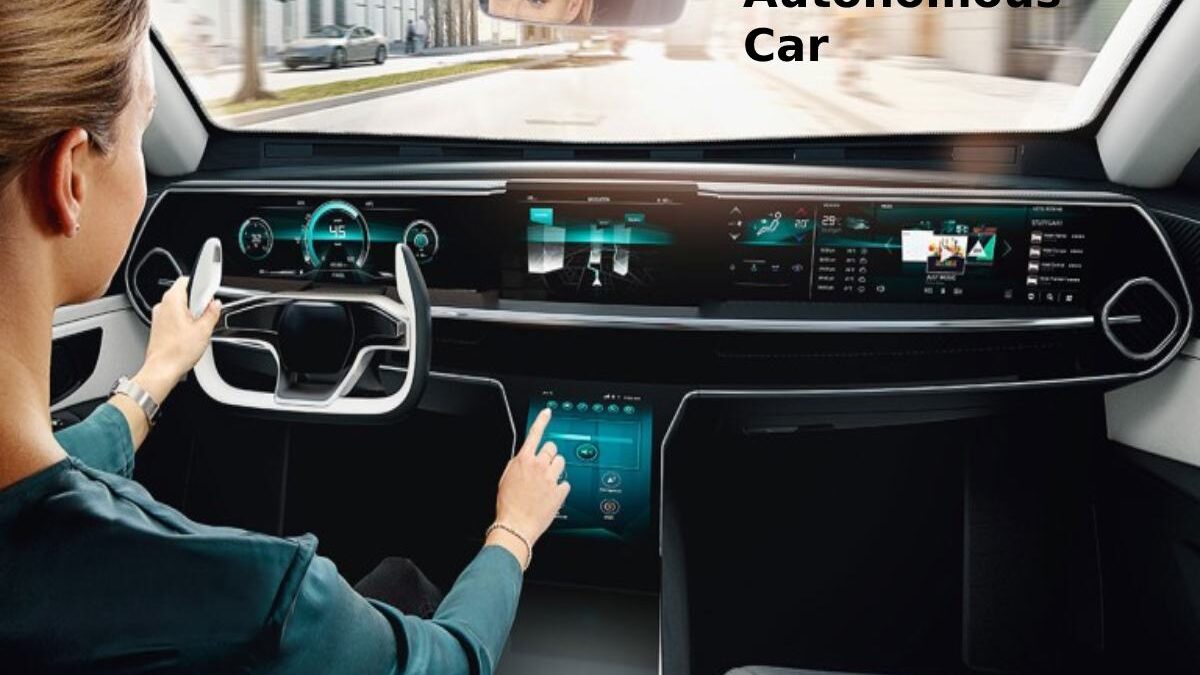
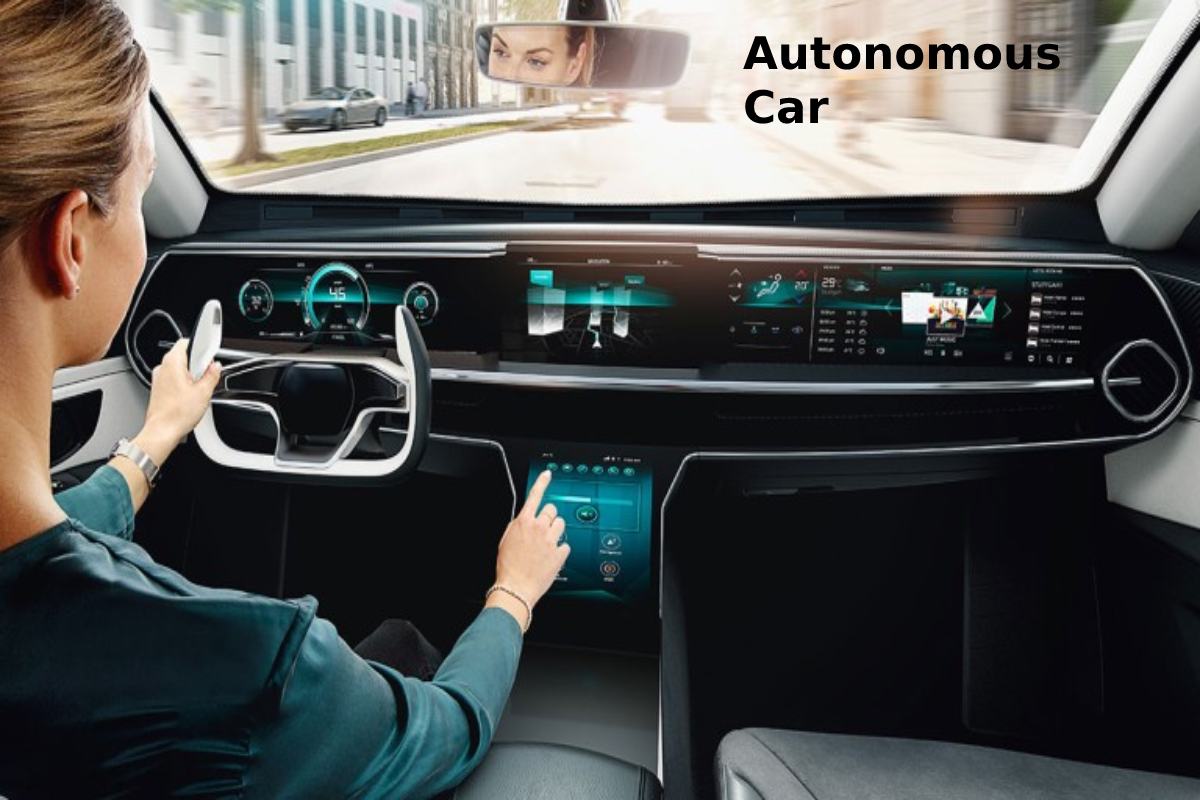
An autonomous car is a self-driving vehicle that uses advanced technologies like AI, sensors, and real-time data to navigate roads without human control. Once considered futuristic, these vehicles are rapidly becoming a reality, aiming to improve safety, reduce accidents, and transform global transportation.
This article belongs to Emerging Technology
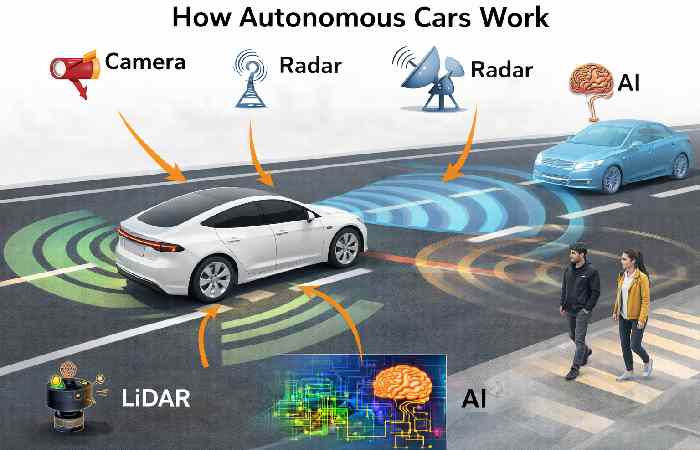
Table of Contents
Autonomous Car, From Myth To Reality
Many people ask the question when it comes to self-driving cars, and for car lovers like us, it’s a great question too. Autonomous Car On the sidelines of the Tokyo Auto Show, we recently had the opportunity to discuss with Toyota executives and understand their take on the matter, as they say, faster than we think.
They are not alone in the race because practically all manufacturers are there. Despite the pleasure we get from driving, travel is generally redundant and often a waste of time. The hours we spend behind the wheel for a hike from Montreal to Quebec aren’t fascinating… What if those hours of driving could pay off? In an autonomous car, you could work, listen to a movie or chat with your friends without worrying about the road, like in a plane, virtual pilot.
Types of Autonomous Car (Levels Explained Globally)
Understanding autonomous driving requires knowing the classification defined by the Society of Automotive Engineers. These levels (0–5) explain how much control a vehicle has over driving.
Autonomous Driving Levels (Global Standard)
| Level | Name | Description | Driver Required | Example |
|---|---|---|---|---|
| Level 0 | No Automation | Human controls everything | Yes | Basic cars |
| Level 1 | Driver Assistance | Cruise control, lane assist | Yes | Hyundai SmartSense |
| Level 2 | Partial Automation | Steering + acceleration | Yes | Tesla Autopilot |
| Level 3 | Conditional Automation | Car drives in certain conditions | Sometimes | Mercedes-Benz Drive Pilot |
| Level 4 | High Automation | Fully autonomous in limited areas | No (in zones) | Waymo |
| Level 5 | Full Automation | No steering wheel needed | No | Future concept cars |
Fully Autonomous Cars – What Does It Really Mean?
Fully autonomous cars (Level 5) are designed to operate without human intervention in any environment. These vehicles use advanced technologies like:
- Artificial Intelligence (AI)
- Machine Learning
- LiDAR Sensors
- Radar & Cameras
- Real-time mapping
Key Features of Fully Autonomous Cars
- No driver or steering wheel required
- 360° environment awareness
- Real-time decision-making
- Reduced human error (major cause of accidents)
According to global research, over 90% of accidents are caused by human error, making autonomous vehicles a major safety breakthrough.
Technologies Behind Autonomous Cars (AI, Sensors & Software)
For authoritative information on automated driving systems, safety technologies, and different levels of driving automation, see the NHTSA Automated Vehicle Safety resource.
Autonomous cars rely on a combination of hardware and software systems working together in real time.
Core Technologies in Autonomous Vehicles
| Technology | Function | Importance |
|---|---|---|
| AI (Artificial Intelligence) | Decision making | Core brain of system |
| Machine Learning | Pattern recognition | Improves over time |
| LiDAR | 3D mapping | High accuracy detection |
| Radar | Distance measurement | Works in bad weather |
| Cameras | Visual recognition | Identifies objects |
| GPS + HD Maps | Navigation | Route precision |
Companies like NVIDIA and Intel are powering autonomous driving chips globally.
Zero Accidents Autonomous Car
The other stated goal, according to Kiyotaka Ise, Toyota’s president of research and development and engineering, is safety. Our goal is nothing less than the goal of “zero accidents,” and we want the roads to be much safer than they are now. It is true that the human factor is mainly responsible for most accidents and that an autonomous vehicle could detect any dangerous element and take control of the car if necessary.
It is also a safe bet that our roads would be less dirty. An autonomous car would only travel in the left lane to pass!
Autonomous Car Safety System (Visual Explanation)
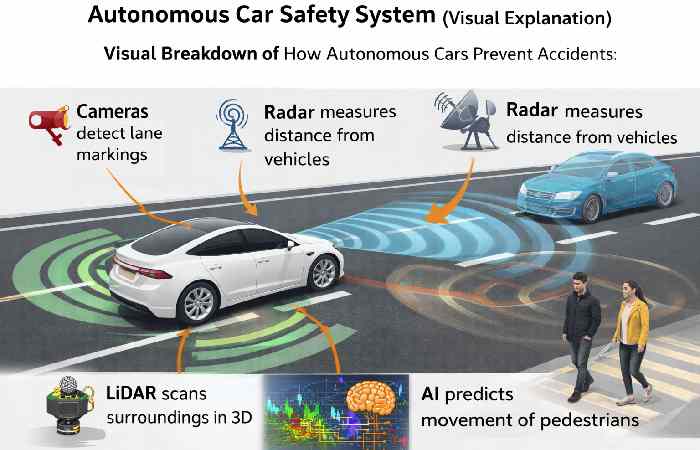
This integrated system reduces accidents and supports the vision of zero fatalities on roads globally.
Mobility For All Autonomous Car
The other aspect that can play in favor of autonomous vehicles and has proven to be very interesting is mobility for all. When Toyota sponsors the 2020 Olympics and Paralympics, the automaker believes autonomous vehicles can significantly improve the mobility of the elderly or disabled, as the notion of driving will no longer be essential for travel.
With the introduction of its “i” concepts, Toyota even believes that a vehicle will become much more than just a machine. Thanks to artificial intelligence, it will be able to interact with you and become your partner. Beyond the simple learning of schedules and driving habits, this concept uses different technologies to measure. The driver’s emotion according to the place and the moment and uses mobility to improve the quality of life of the passengers.
However, we steer clear of the 100% autonomous car without a driver’s seat. No one can predict how fast we will get there. But more and more driver assistance systems will be by then. During our visit to the region, we had the opportunity to test some of these technologies on the Lexus LS, including driving assistance that keeps the car between lanes and automatically brakes when needed. And Lane Change Assist, which allows you to change lanes automatically, without driver intervention.
Will a vehicle equipped with a steering wheel ever be as rare as a manual transmission? It is possible, and it seems strange to us, but a new generation of drivers will discover the autonomous car, and driving could well be a waste of time and an unknown pleasure.
Advantages of Autonomous Cars (Global Benefits)
Benefits of Autonomous Vehicles
| Benefit | Explanation | Impact |
|---|---|---|
| Safety | Reduces human error | Fewer accidents |
| Efficiency | Optimized driving | Less fuel usage |
| Accessibility | Helps elderly/disabled | Inclusive mobility |
| Productivity | Work while traveling | Time saving |
| Traffic Reduction | Smart coordination | Less congestion |
Challenges of Autonomous Cars Worldwide
Key Challenges
| Challenge | Description | Status |
|---|---|---|
| Regulations | Laws vary by country | Developing |
| Infrastructure | Road quality issues | Major barrier |
| Cost | Expensive technology | High |
| Cybersecurity | Risk of hacking | Ongoing concern |
| Public Trust | Fear of AI control | Growing slowly |
As connected vehicles exchange and process increasing amounts of information, technologies such as blockchain technology may also be relevant to discussions around secure data management, identity, and trusted digital transactions.
Autonomous Car in India and Worldwide Top 5 Countries
Autonomous vehicle adoption varies globally based on infrastructure, regulations, and technology readiness.
Top 5 Countries Leading in Autonomous Cars
| Rank | Country | Key Companies | Adoption Level | Status |
|---|---|---|---|---|
| 1 | USA | Waymo, Tesla | High | Commercial testing |
| 2 | China | Baidu, AutoX | High | Rapid expansion |
| 3 | Germany | BMW, Mercedes | Medium-High | Legal Level 3 |
| 4 | Japan | Toyota, Honda | Medium | Smart city focus |
| 5 | UK | Oxbotica | Medium | Pilot projects |
Autonomous Car in India
India is still in early stages due to:
- Road complexity
- Traffic unpredictability
- Regulatory challenges
However, companies like Tata Motors and Mahindra & Mahindra are exploring ADAS (Level 1–2 systems).
Future potential is high with smart cities and EV growth.
Trusted Global Resources
National Highway Traffic Safety Administration –
Automated Vehicles Safety Guidelines
(Official U.S. guidelines on autonomous vehicle safety, testing, and deployment)
International Transport Forum –
Global Autonomous Vehicle Policy Insights
(Research on infrastructure, regulations, and global AV adoption strategies)
Government Policies & Regulations for Autonomous Cars
Different countries are setting rules for autonomous vehicles.
Global Regulations Overview
| Country | Regulation Status | Key Policy |
|---|---|---|
| USA | Advanced | Testing allowed |
| Germany | Legal Level 3 | Strict safety rules |
| Japan | Controlled rollout | Smart mobility |
| India | Limited | Testing restrictions |
Organizations like World Economic Forum are actively shaping global AV policies.
Driving aids that are efficient but not autonomous
Various developments are beginning to implement between the current car and this level 5. Including high-performance driving aids or automatic systems that operate in certain areas.Or under certain circumstances. Whatever the level, these aids are an essential and indisputable benefit in terms of safety; the driver remains in a position to get back behind the wheel if necessary.
The race for idealized communication in these vehicles, therefore, carries the germ of great disappointments. On the one hand, current actions do not allow us to speak of autonomy. On the other hand, this discourse produces “about trust. And the abandonment of supervision, which could generate new types of accidents derived from driving disconnection. In addition, manufacturers are currently working on monitoring the driver’s vigilance to keep him in the “driving circuit.” So you continue to keep a close eye on what your car is doing.
In the long-term transition period in which level 2 or 3 cars will circulate. This recourse to driver assistance leaves one in doubt. And it seems somewhat paradoxical. In fact, one of the arguments used to idealize this autonomous car is a statistic. 9 accidents out of 10 are of human origin. So the machine seems to be the solution. However, overwhelming the human involved in the actions.
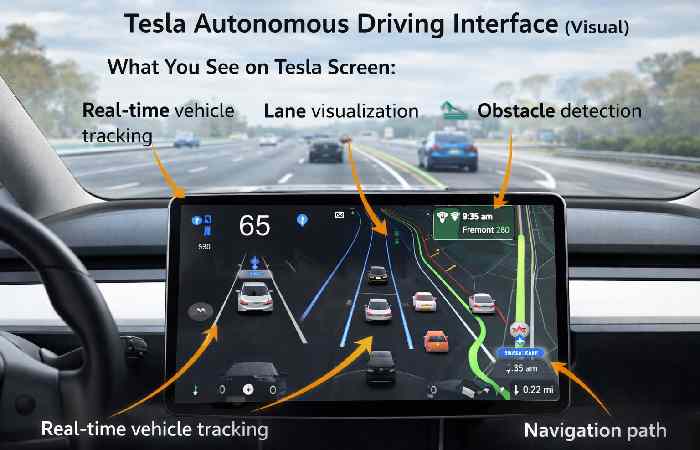
Autonomous Car Tesla – Technology Leader
Tesla is one of the most recognized leaders in autonomous driving technology.
Autonomous Features
| Feature | Description |
|---|---|
| Autopilot | Lane centering + adaptive cruise |
| Full Self-Driving (FSD) | Advanced AI driving |
| Smart Summon | Car comes to you |
| Navigate on Autopilot | Highway automation |
Tesla currently operates at Level 2, with ongoing development toward higher autonomy.
Tesla Autonomous Driving Interface (Visual)
Autonomous Car vs Electric Car – Key Differences
Many people confuse autonomous cars with electric vehicles.
Autonomous vs Electric Cars
| Feature | Autonomous Car | Electric Car |
|---|---|---|
| Driving Control | Self-driving | Human driving |
| Energy Source | Any (often electric) | Electric only |
| Technology Focus | AI & sensors | Battery & motor |
| Example | Tesla FSD | Nissan Leaf |
Note:A car can be both autonomous and electric (like Tesla Model S).
Autonomous Car Price (Global Market Overview)
These cars vary widely in price depending on technology level and brand.
Autonomous Car Price Worldwide
| Car Model | Level | Price (Approx) | Country |
|---|---|---|---|
| Tesla Model S | Level 2 | $90,000+ | USA |
| Mercedes EQS | Level 3 | $120,000+ | Germany |
| Waymo Vehicles | Level 4 | Not for sale | USA |
| Cruise Origin | Level 4 | Prototype | USA |
| Concept Level 5 | Level 5 | Future | Global |
Autonomous Car Price in India
India Price Estimation
| Type | Expected Price |
|---|---|
| Level 1–2 cars | ₹10–40 lakh |
| Level 3 cars | ₹50 lakh+ |
| Level 4–5 | Not available yet |
Due to import costs and regulations, autonomous cars are currently expensive in India.
Factors Affecting Autonomous Car Price
Price Influencing Factors
| Factor | Impact on Price |
|---|---|
| Sensor Technology | High cost |
| AI Software | Expensive development |
| Brand | Premium pricing |
| Regulations | Import taxes |
| Production Scale | Reduces cost over time |
Level 3 Autonomous Cars List
Level 3 Vehicles
| Model | Company | Availability |
|---|---|---|
| Mercedes S-Class | Mercedes-Benz | Germany |
| Honda Legend | Honda | Japan |
These cars allow hands-free driving under certain conditions.
Level 4 Autonomous Cars List
Level 4 Vehicles
| Company | Vehicle | Use Case |
|---|---|---|
| Waymo | Robotaxi | Public transport |
| Cruise | Origin | Urban mobility |
Fully autonomous but limited to specific areas (geo-fenced zones).
Level 5 Autonomous Cars List with Price Worldwide
Level 5 Concepts
| Model | Company | Expected Price | Status |
|---|---|---|---|
| Toyota e-Palette | Toyota | Not fixed | Prototype |
| Tesla Robotaxi | Tesla | TBD | Upcoming |
| Apple Car | Apple | TBD | Rumored |
These vehicles will remove the need for drivers completely.
Autonomous Cars Use Cases Across Industries
Autonomous vehicles are not limited to personal transport.
Industry Applications
| Industry | Use Case | Example |
|---|---|---|
| Transportation | Robotaxis | Waymo |
| Logistics | Self-driving trucks | Tesla Semi |
| Healthcare | Patient transport | Smart ambulances |
| Agriculture | Autonomous tractors | John Deere |
| Delivery | Last-mile robots | Amazon |
Future of Level 5 Autonomous Cars
Future Vision:
- No steering wheel
- AI-controlled cities
- Zero traffic accidents
- Smart road communication
Autonomous Car Market Size and Growth (Global Forecast)
Market Growth
| Year | Market Size |
|---|---|
| 2023 | $150 Billion |
| 2025 | $300 Billion |
| 2030 | $1 Trillion+ |
Growth driven by AI, EV adoption, and smart city development.
For a broader perspective on how connected infrastructure, data, and technology can shape large urban environments, see this discussion of data and technology in megalopolises.
Future Innovations in Autonomous Cars
- Emerging Trends
- Vehicle-to-vehicle (V2V) communication
- Smart traffic systems
- AI-based emotional detection
- Autonomous flying taxis
Ethical Issues in Autonomous Cars (AI Decision Making)
Autonomous cars must make critical decisions in emergencies.
Ethical Scenarios
| Scenario | Challenge |
|---|---|
| Pedestrian vs Passenger | Decision conflict |
| Accident avoidance | Priority setting |
| Data privacy | User protection |
The broader ethical dimension of technology is also relevant when considering how autonomous systems make decisions, process personal data, and affect people in real-world situations.
Conclusion
Future of Autonomous Cars – Global Outlook
Autonomous cars are transforming transportation worldwide. With advancements in AI, infrastructure, and regulations, the future includes: