

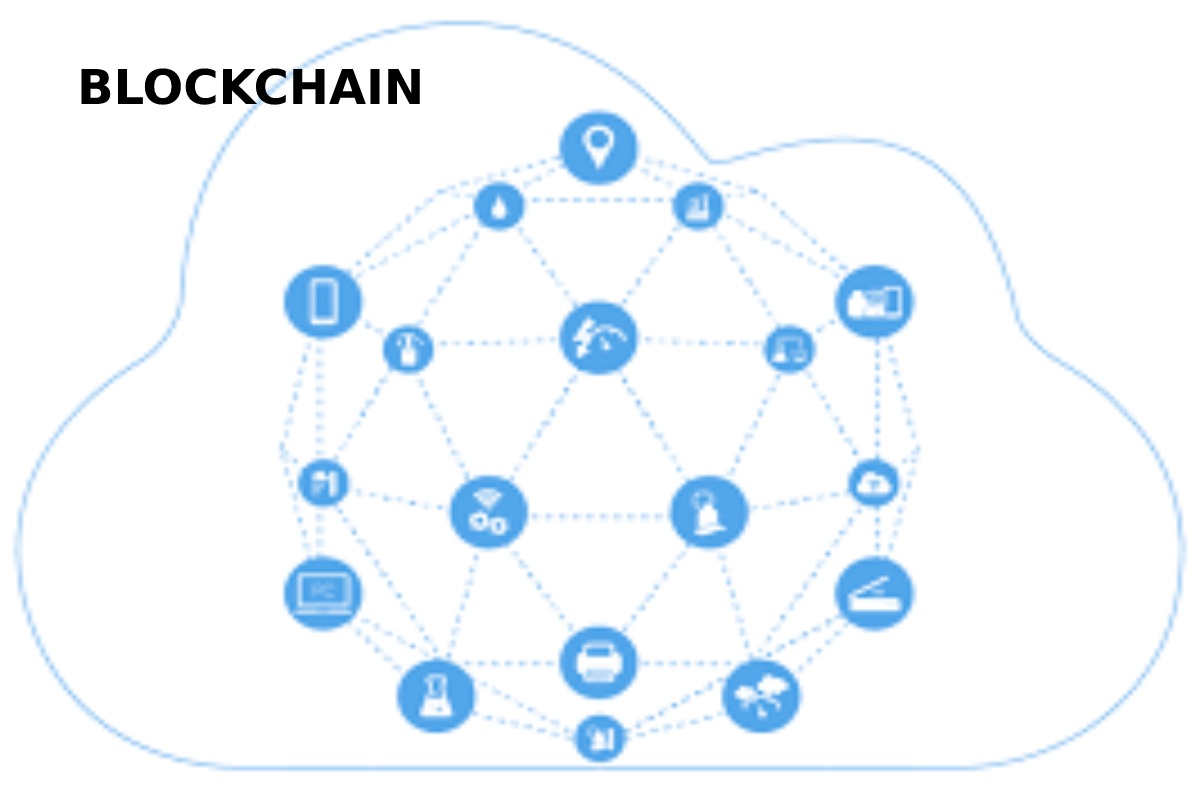
Blockchains are decentralized digital ledgers that record transactions securely, transparently, and permanently. While they were first introduced to power Bitcoin, blockchains in 2026 now support global financial systems, supply chains, digital identity verification, smart contracts, and enterprise automation across industries.
In 2026, blockchains are no longer experimental technology. Governments are testing central bank digital currencies (CBDCs), enterprises are automating contracts through smart agreements, and cross-border payments are becoming faster and more cost-efficient using blockchain infrastructure.
Why blockchains matter in 2026:
- Reduce fraud and data manipulation
- Enable instant cross-border payments
- Improve supply chain transparency
- Lower operational costs for businesses
- Increase trust through decentralized verification
Global institutions continue to monitor and promote blockchain innovation for financial inclusion and digital transformation.
Table of Contents
Definition of Blockchains and How Do They Work?
Simply put, blockchains are digital records of asset owners that are continually updated.
Exchange data, like the date, time, and number of exchanges and the members in the exchange, is encoded in a block that gets together with different blocks to shape a chain.
No focal power controls the blockchains. This is one reason that Bitcoin and other cryptographic forms of money are so entrancing.
It has admission to the same information, ensuring transparency and ongoing reconciliation of operations.
Since these strings are present on many computers, there is no centralized version of the information that a hacker could attack. Thus, it is no longer necessary to resort to a trusted third party to verify the information that concerns him and that relates to the transaction he wishes to carry out.
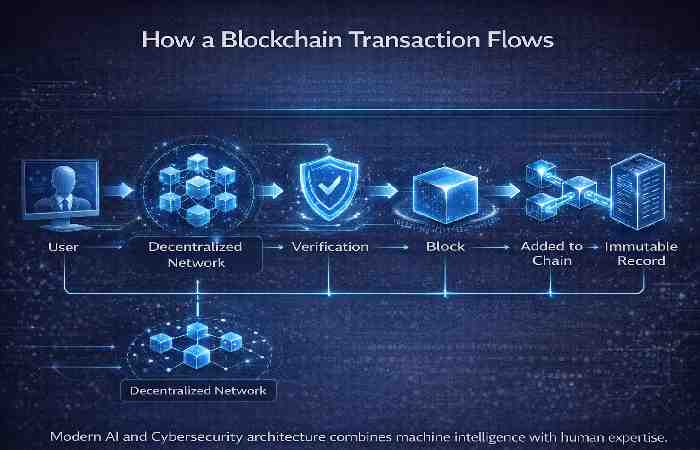
Visual Overview – How a Blockchain Transaction Flows
How Blockchains Work (Step-by-Step Overview Table)
Blockchain Transaction Process
| Step | Process | What Happens |
| 1 | Transaction Initiated | User requests transfer or record entry |
| 2 | Verification | Network nodes validate transaction |
| 3 | Block Creation | Verified data grouped into a block |
| 4 | Consensus | Nodes agree using PoW or PoS |
| 5 | Chain Addition | Block added permanently |
| 6 | Record Finalized | Immutable ledger updated |
What are the Concrete Examples of the Application of Blockchain Technology?
The monetary administrations industry is starting to utilize blockchain innovation to foster new administrations and set aside cash. For instance, the Australian Stock Trade as of late reported that it would begin utilizing blockchains to settle exchanges. This innovation will be use to enroll value interests and deal with the getting and settlement free from value exchanges and helps in cooperative CRM to advance Administration.
One more illustration of the utilization of blockchains in monetary administrations comes from the organization Abra. It utilizes a cash move stage that permits unfamiliar laborers to send cash back to their nation of origin in 54 distinct monetary forms. As indicated by the World Bank, laborers can move cash rapidly and efficiently utilizing this stage rather than a conventional specialist organization, for example, Western Association, which charges a typical expense of 7% of the sum sent.
Another project that uses blockchain technology has be launched by the World.
Wide Fund for Nature and three companies working together to guarantee a supply of tuna based on the responsible exploitation of the resource in the Pacific Ocean.
Consensus a blockchain company Traceable an IT company and Sea Quest Fiji (a tuna fishing and processing company) use a blockchain to ensure traceability of tuna caught and sold.
Every transaction is record on a blockchain from fishermen to local fishmongers and grocery stores to fish brokers.
In this way, regulars can sure of the quality of the tuna they buy and the responsible. And legal management of this resource.
Global Blockchain Adoption by Industry
Industry Use of Blockchains
| Industry | Use Case | Adoption Level |
| Finance | Cross-border payments | Very High |
| Supply Chain | Product traceability | High |
| Healthcare | Secure patient data | Medium |
| Government | Digital identity | Growing |
| Retail | Smart contracts | Medium |
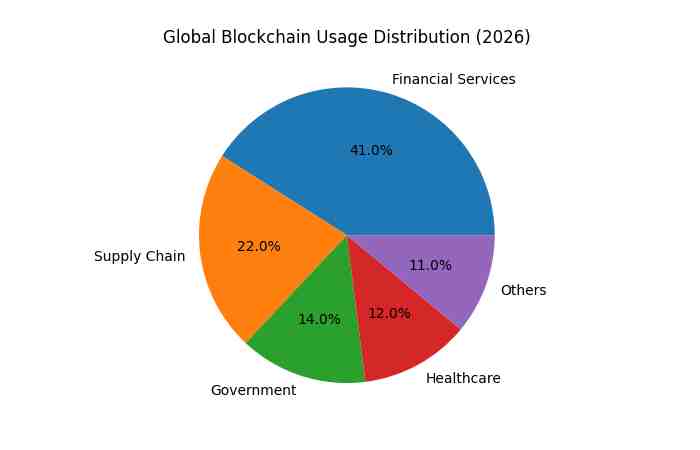
Global Blockchain Usage Distribution
| Sector | Share |
| Financial Services | 41% |
| Supply Chain | 22% |
| Government | 14% |
| Healthcare | 12% |
| Others | 11% |
What Does This Mean for Entrepreneurs?
Several large companies, including Microsoft, IBM with more than 400 blockchain projects.
It underway worldwide it Unilever, and Toyota, are investing in blockchain.
But the impact of this technology will not be limit to large companies. Your business could also affect shortly.
If your business requires you to verify transactions of any kind, you should consider this technology’s impact on your business.
You just have to look at equity clearing and settlement risks . To see how many secondary market functions and other services could affect.
If you are part of a supply chain, your partners may require you to digitally track their processes. And more specifically, if you are a supplier to large companies, you need to start thinking about your place in your customers’ supply chains and whether they might ask you to participate in a blockchain. .
If you supply goods to customers or other companies, could you benefit from the traceability of your products to their origin?
Be aware of the higher prices that fishmongers get when they sell. Their tuna, ensuring that customers are responsible for using the resource.
What Blockchains Mean for Businesses Worldwide
- Reduce fraud and verification costs
- Improve transparency in supply chains
- Enable smart contracts
- Support digital payments
- Enhance compliance tracking
Business Benefits of Blockchains
| Business Function | Blockchain Impact |
| Payments | Faster settlements |
| Contracts | Automated execution |
| Auditing | Real-time records |
| Logistics | Product traceability |
| CRM | Shared verified data |
List of Blockchains
The basics of bitcoins and blockchains, how many blockchains are there, and list of blockchains are interconnected topics that explain the foundation of modern cryptocurrency technology. Bitcoin is the first and most well-known digital currency, operating on a decentralized ledger system called a blockchain, which records transactions securely using cryptography and consensus mechanisms like Proof of Work.
Blockchains are not limited to Bitcoin; they form the backbone of many cryptocurrencies and decentralized applications. As for how many blockchains are there, the number is constantly growing, with thousands of public and private blockchains serving different purposes, from finance and gaming to supply chain and identity verification.
A brief list of blockchains includes Bitcoin, Ethereum, Binance Smart Chain, Solana, Cardano, Ripple (XRP Ledger), Polygon, Avalanche, Polkadot, and Tezos, each offering unique features, consensus models, and use cases in the evolving Web3 ecosystem.
Major Blockchains and Their Use Cases
List of Blockchains
| Blockchain | Primary Use | Consensus Model |
| Bitcoin | Digital currency | Proof of Work |
| Ethereum | Smart contracts | Proof of Stake |
| Solana | High-speed dApps | Proof of History |
| Cardano | Research-based blockchain | Proof of Stake |
| Polkadot | Interoperability | NPoS |
| Avalanche | DeFi & enterprise | Avalanche consensus |
| Tezos | Self-amending ledger | Liquid PoS |
List of Major Blockchains in 2026
| Blockchain | Launch Year | Consensus Model | Primary Use |
| Bitcoin | 2009 | Proof of Work | Digital currency |
| Ethereum | 2015 | Proof of Stake | Smart contracts |
| Binance Smart Chain | 2020 | Proof of Staked Authority | DeFi |
| Solana | 2020 | Proof of History | High-speed apps |
| Cardano | 2017 | Ouroboros PoS | Sustainable blockchain |
| Ripple (XRP Ledger) | 2012 | Federated consensus | Banking transfers |
| Polygon | 2017 | PoS | Ethereum scaling |
| Avalanche | 2020 | Avalanche Consensus | Enterprise dApps |
| Polkadot | 2020 | Nominated PoS | Multi-chain ecosystem |
| Tezos | 2018 | Liquid PoS | Governance-focused apps |
There are now 1,000+ active public blockchains and thousands more private networks used by enterprises and governments.
Blockchain Market Cost & Adoption in 5 Leading Countries
Blockchain Adoption & Cost Overview
| Country | Avg Blockchain Developer Salary | Blockchain Setup Cost (SME Est.) | Popular Apps | Adoption Level |
| USA | $120,000/year | $50k–$200k | Coinbase, MetaMask | Very High |
| UK | £80,000/year | £40k–£150k | Revolut Crypto | High |
| India | ₹12–25L/year | ₹10L–₹50L | WazirX | Growing |
| Germany | €75,000/year | €35k–€140k | Bitpanda | High |
| Singapore | SGD 95,000/year | SGD 60k–250k | Crypto.com | Very High |
Global Blockchain Market Growth (2026 Data)
Global Blockchain Market Size (USD Billion)
| Year | Market Size (USD Billion) |
| 2021 | 6.6 |
| 2022 | 11.1 |
| 2023 | 17.5 |
| 2024 | 26.9 |
| 2025 | 38.4 |
| 2026 (Est.) | 55+ |
Growth Drivers:
- AI + blockchain integration
- CBDCs (Central Bank Digital Currencies)
- Cross-border payments
- Web3 adoption
- Enterprise smart contracts
Blockchains are no longer limited to cryptocurrencies. They are infrastructure systems for secure data exchange, digital trust, and enterprise automation.
Blockchain Transaction Fees Comparison (2026)
| Blockchain | Avg Fee (2026) | Speed | Best For |
| Bitcoin | $8–$20 | 10 min | Store of value |
| Ethereum | $5–$25 | 15 sec | Smart contracts |
| Solana | <$0.01 | 2 sec | High-speed apps |
| Binance Smart Chain | <$0.50 | 3 sec | Low-cost DeFi |
| Polygon | <$0.01 | 2 sec | Scaling Ethereum |
Real-World Applications of Blockchains (Updated 2026)
| Industry | Blockchain Application | Global Example |
| Finance | Cross-border payments | Ripple (XRP Ledger) |
| Stock Markets | Settlement systems | Australian Securities Exchange |
| Supply Chain | Tuna traceability | WWF + Traceable |
| Banking | Digital identity | IBM Blockchain |
| Retail | Product origin tracking | Walmart Blockchain |
Blockchains now reduce fraud, eliminate intermediaries, lower costs, and increase transparency globally.
Benefits of Blockchains for Entrepreneurs in 2026
Why Businesses Are Adopting Blockchain:
- Lower transaction costs
- Faster international payments
- Transparent supply chains
- Automated smart contracts
- Reduced fraud risk
- Improved customer trust
- Better data security
- Tokenization of assets
- Access to global investors
- Decentralized finance options
Companies like Microsoft, IBM, Toyota, and Unilever continue investing in enterprise blockchain solutions.
Future of Blockchains Beyond 2026
In 2026 and beyond, blockchains are evolving toward:
- AI-integrated smart contracts
- Government-backed CBDCs
- Decentralized identity systems
- Tokenized real estate
- Web3 social media
- Green energy tracking
Experts predict blockchain adoption will expand into healthcare, education certification, voting systems, and global logistics.
Conclusion
Blockchains have evolved far beyond their origins in cryptocurrency. Today, they power financial systems, supply chains, digital identity platforms, and enterprise operations globally. From the United States to Singapore, businesses are investing heavily in blockchain infrastructure to reduce costs, improve transparency, and automate trust.
As digital transformation accelerates, blockchains are becoming foundational technology — not experimental innovation. Understanding how they work, where they are used, and their global cost implications is essential for entrepreneurs, investors, and technology leaders alike.