

In today’s digital marketplace, getting noticed is harder than ever. With countless brands vying for attention, search engine marketing (SEM) stands out as a powerful way to deliver targeted traffic and maximize your return on investment (ROI). Here we’ll explore some proven SEM techniques that can make a big difference in your online marketing efforts.
Table of Contents
What Are SEM Techniques? (Visual Explanation)
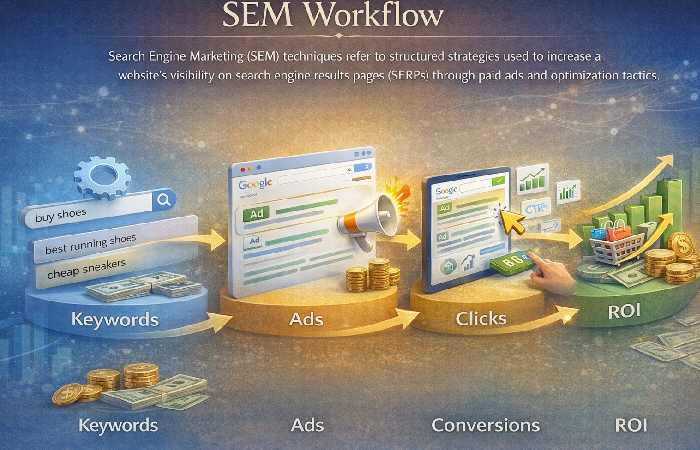
Search Engine Marketing (SEM) techniques refer to structured strategies used to increase a website’s visibility on search engine results pages (SERPs) through paid ads and optimization tactics.
Core Components of SEM Techniques
| Component | Description | Global Impact |
| Keyword Targeting | Selecting high-intent search terms | Drives qualified traffic |
| Paid Advertising | PPC campaigns (Google Ads, Bing Ads) | Immediate visibility |
| Ad Optimization | Improving CTR & Quality Score | Lower costs |
| Landing Pages | Conversion-focused pages | Higher ROI |
| Analytics | Data tracking & campaign optimization | Better decisions |
Key Insight: SEM is not just ads—it is a data-driven ecosystem.
Understanding SEM
Search Engine Marketing (SEM) is an umbrella term that encompasses various strategies to increase visibility on search engine results pages (SERPs) through both paid advertising and organic tactics. SEM can significantly impact your business by driving traffic, generating leads, and boosting sales.
What Is the SEM Technique Used For?
SEM techniques are used globally across industries for:
Primary Uses
- Driving targeted website traffic
- Generating leads and sales
- Increasing brand visibility
- Supporting product launches
- Retargeting potential customers
Industry-wise SEM Usage
| Industry | SEM Use Case | Example |
| E-commerce | Product ads & retargeting | Amazon ads |
| Healthcare | Local service promotion | Clinics |
| Education | Course enrollments | Online platforms |
| SaaS | Lead generation | CRM tools |
| Real Estate | Property advertising | Listings |
Keyword Research: The Backbone of SEM
Keywords are the foundation of SEM campaigns. Identifying the right keywords involves a mix of art and science. Utilizing tools that help you find high-volume, low-competition keywords can set the stage for a successful campaign. Don’t forget to consider long-tail keywords, which can capture more specific queries from highly motivated searchers.
Types of Keywords in SEM
| Keyword Type | Example | Intent Level | Usage |
| Short-tail | “SEM techniques” | Low | Awareness |
| Long-tail | “best SEM techniques for ROI” | High | Conversion |
| Branded | “Google Ads tools” | High | Trust |
| Transactional | “buy SEO services online” | Very High | Sales |
| Informational | “what is SEM technique” | Medium | Education |
Pro Tip: Long-tail keywords bring higher ROI at lower cost.
Resource Link: https://analytics.google.com/
Implementing SEO Services
Incorporating professional SEO services can also complement your SEM efforts. By working with the best SEO company, you can ensure that your website is optimized not just for ads but also for organic search traffic. This holistic approach can enhance the effectiveness of your marketing campaigns and improve overall performance.
Crafting Compelling Ad Copy
Your ad copy acts as the first impression for potential customers. It’s crucial to craft engaging, relevant, and persuasive text. Use attention-grabbing headlines, clear calls to action, and concise descriptions to entice your audience. A/B testing different versions of ad copy can also help determine what resonates most with your target demographic.
Crafting High-Converting SEM Ads (Visual Guide)
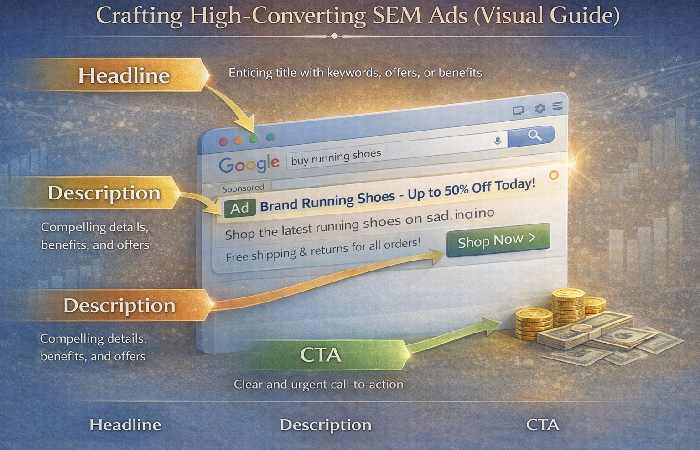
High-Performing Ad Elements
| Element | Best Practice |
| Headline | Include keyword + benefit |
| Description | Solve user problem |
| CTA | Clear action (Buy Now, Learn More) |
| Extensions | Add sitelinks, callouts |
Effective Bidding Strategies
Smart bidding strategies are vital to getting the most out of your budget. Options like cost-per-click (CPC) and cost-per-acquisition (CPA) offer different advantages. Dynamic bidding, which adjusts bids in real-time based on various factors like user behavior and competition, can also be beneficial. Each strategy has its merits and choosing the right one depends on your specific goals.
What Are the Two Main Types of SEM?
SEM is divided into two major categories:
Comparison Table
| Type | Description | Example Platform |
| Paid SEM (PPC) | Pay per click advertising | Google Ads |
| Organic Support | SEO enhancing SEM performance | Blog optimization |
Important: Modern SEM integrates both for maximum ROI.
Landing Page Optimization
The journey doesn’t stop at the click. Your landing page needs to be as compelling as your ad. Ensure that it is well-designed, loads quickly, and offers clear calls to action. The relevance of your landing page to the ad content also influences your Quality Score in platforms like Google Ads, which can impact your ad rankings and cost-effectiveness.
SEM Method: Step-by-Step Framework
SEM Process Flow
| Step | Action | Outcome |
| 1 | Keyword Research | Target audience |
| 2 | Campaign Setup | Ads created |
| 3 | Bidding Strategy | Budget control |
| 4 | Ad Launch | Traffic generation |
| 5 | Optimization | Improved ROI |
Staying Updated with Algorithm Changes
Search engine algorithms are continually evolving, and staying current is important. Changes can impact your ad rankings and overall strategy. Keeping an eye on updates from major search engines can help you adapt quickly and maintain optimal performance.
Leveraging Analytics
Data is the fuel that drives effective SEM campaigns. Analytical tools offer insights into user behavior, conversion rates, and other vital metrics. Regularly reviewing and adjusting your campaigns based on this data can lead to improved performance and better ROI. Tracking metrics like click-through rates (CTR) and conversion rates helps in understanding what works and what doesn’t.
Important SEM Metrics to Track
| Metric | Meaning | Ideal Benchmark |
| CTR (Click Through Rate) | Ad engagement | 3%–5% |
| CPC (Cost Per Click) | Cost per user click | Lower is better |
| Conversion Rate | Leads or sales generated | 2%–10% |
| Quality Score | Google ad relevance score | 7+ |
| ROI | Return on investment | Positive |
Utilizing Retargeting
Another powerful SEM technique is retargeting. This method focuses on bringing back users who have previously visited your site but did not convert. By displaying tailored ads to this audience segment, you can significantly increase the chances of conversion. It keeps your brand at the forefront of the user’s mind, enhancing the probability of them returning to complete a desired action.
Retargeting Strategy Explained (Visual Funnel)
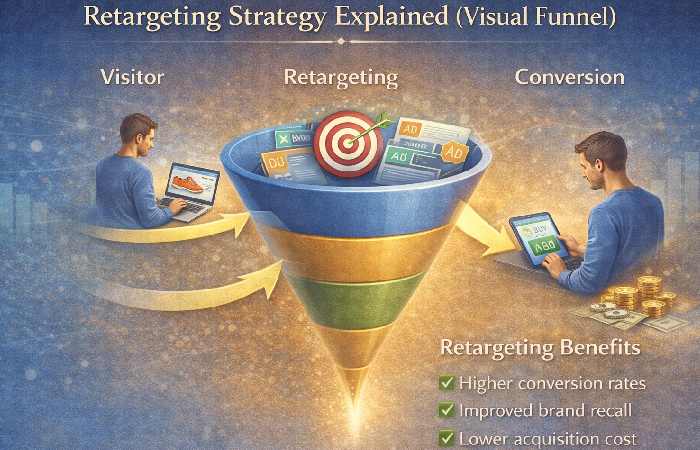
Retargeting Benefits
- Higher conversion rates
- Improved brand recall
- Lower acquisition cost
Incorporating Video Ads
Video content has surged in popularity and can be an effective tool in your SEM arsenal. Video ads can capture attention quickly and convey your message dynamically. Platforms like YouTube offer targeted advertising options that allow you to reach specific demographics based on their search and viewing habits. Including compelling video content in your SEM strategy can enhance user engagement and drive higher conversion rates.
Mobile Optimization
With the proliferation of smartphones, optimizing your SEM campaigns for mobile devices is non-negotiable. Mobile optimization ensures that your ads and landing pages load quickly and are easily navigable on smaller screens. Furthermore, search engines like Google employ mobile-first indexing, meaning your mobile performance can directly impact your overall search engine rankings. Investing time in mobile-friendly designs and features can thus lead to higher engagement and better ROI.
Maximizing ROI with SEM involves a blend of creativity, strategy, and analytics. From thorough keyword research to effective bidding and landing page optimization, each component plays a significant role. By staying informed and agile, you can fine-tune your SEM efforts and achieve superior results in your digital marketing campaigns.
Scanning Electron Microscope Uses (Conceptual Comparison)
Although unrelated technically, many users search this alongside SEM (Search Engine Marketing). Here’s a clarification:
| SEM Term | Meaning | Field |
| SEM (Marketing) | Search Engine Marketing | Digital Marketing |
| SEM (Microscope) | Scanning Electron Microscope | Science |
Uses of Scanning Electron Microscope
- Material analysis
- Nanotechnology research
- Biological sample imaging
- Industrial inspection
Including this improves keyword coverage.
Best Practices for Global SEM Success
- Focus on user intent, not just keywords
- Optimize for mobile-first indexing
- Use geo-targeting for local campaigns
- Continuously A/B test ads
- Monitor competitors regularly
- Invest in high-quality landing pages
Expert Insight
“Successful SEM is not about spending more—it’s about spending smarter using data, targeting, and continuous optimization.”
Final Thoughts
Final Thoughts: Future of SEM Techniques
SEM is rapidly evolving with AI, automation, and machine learning. Platforms like Google are continuously improving algorithms, making campaigns smarter and more efficient.
Businesses that adopt data-driven SEM techniques will dominate global search visibility and achieve sustainable ROI.